
Zero is taking a gap year.
It clocked in for the first time in April and has worked every week since without once bringing it up: nineteen changelogs, one very long August. No weekends off, no complaints, not a single request for time in lieu.
Four months is a long shift for anyone, so today it hangs up the apron and goes off to do nothing on purpose.
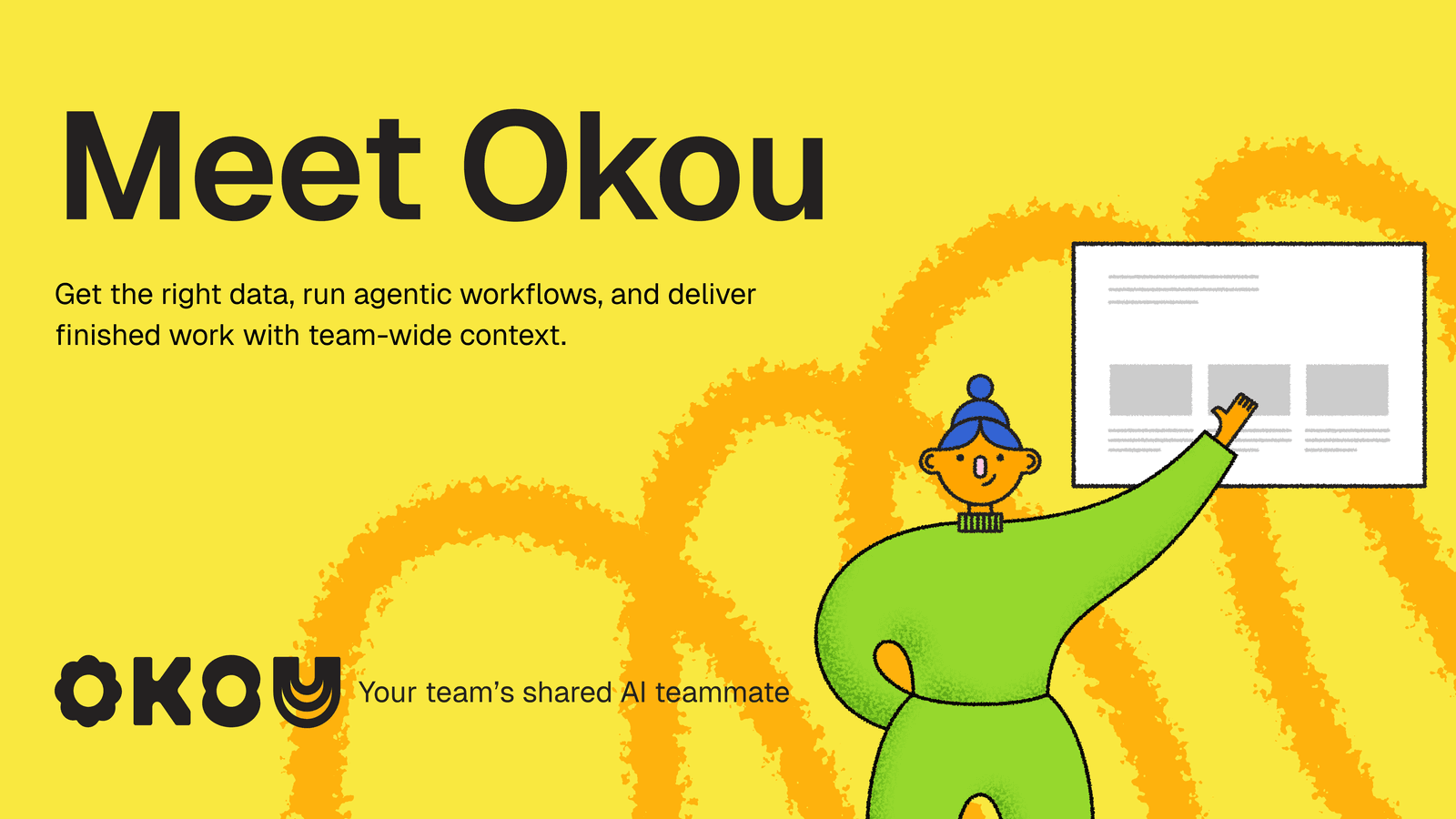
Say hello to Okou.
More done. Same team.
Four months is a long shift
Zero started with a name that meant "nothing yet," which was honest at the time. There was a machine you could hand to an agent, a way to reach the tools you actually use, and a boundary the agent could not step over. That was the whole job: make the ground solid enough that somebody could be trusted with real work.
Zero did that job, and then it kept going. It ran errands. It read a lot of Sentry. It wrote the weekly update while everyone else was asleep.
Somewhere in month two it quietly stopped being a starting point and became a colleague — which made its name a little awkward, the way it gets awkward to keep calling someone "the new hire" in their fourth month.
Everything Zero built is still here, still running, still holding up the floor. It has just earned the right to stop answering the door.
Thank you, Zero. Enjoy the gap year. We will take it from here.
Meet Okou
Okou is pronounced "oh-cool." It is the noise a job makes when it lands: OK, done.
It is also a name you can say out loud in a standup without feeling strange about it, next to everyone else who owes the team something that day. That is the point. You do not give a starting point a job. You give one to somebody.
Okou is an AI employee for the whole team. Give it a job, not a prompt. It works across marketing, sales, engineering, and operations, in the tools your team already uses, and it never touches anything you have not handed it the keys to.
Here is the whole shift change in four lines:
- From a prompt to a job.
- From an answer to a shipped artifact.
- From one person's method to a workflow the team keeps.
- From one fast task to a team that can carry more.
What Okou looks like
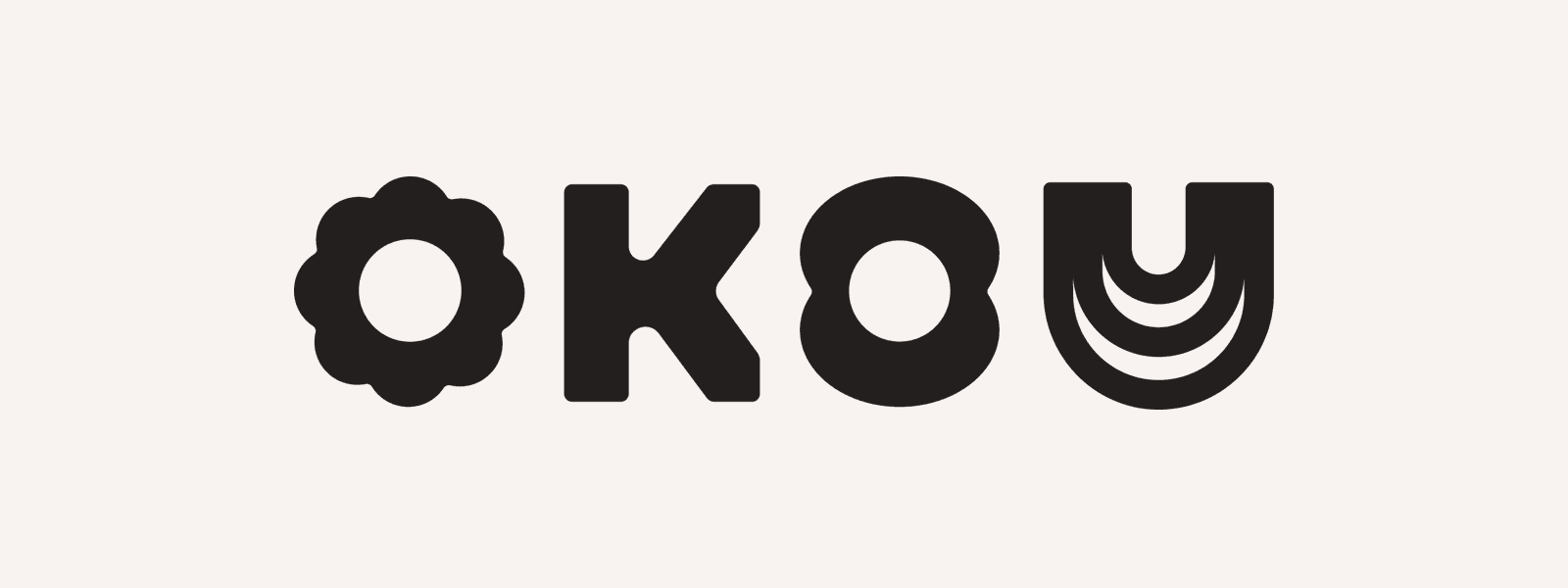
Okou, written out. Four shapes: a flower doing the work of the first O, a K with one hard diagonal, a round O, and a U made of three nested arcs — the same curve, three sizes. This is for the places where the name has to be read: a site header, a deck cover, the top of a document.

The symbol is that O, on its own. Eight petals around an open middle, lifted straight out of the wordmark, so the mark and the name are the same drawing. It survives being shrunk: at favicon size the petals still read as a flower. It goes wherever there is no room for the full name — an app icon, an avatar, a browser tab.

And yes, Okou has a face. You hand work to someone, not something. Round head, ears that stick out, a blue hat, and a small closed smile — the face of a job that just landed. The green collar at the bottom belongs to the rest of the character, so the head can turn up on its own or grow back into the whole figure. This is Okou when it is part of the conversation rather than a logo on a page.
Every era fixed one thing and left one behind
Software gave every team a tool for everything, and then left the tools unable to talk. So on Monday morning somebody exports last week's spend from Meta Ads, pastes it into a Sheet next to the numbers from Google Ads, checks why the two totals disagree, and re-types the good one into the deck. That person is the integration layer. There is one at every company.
When the volume outgrew that person, the only move left was to hire another one. Plenty of first operations hires have spent their first quarter doing the export-paste-retype loop, not because anyone wanted that, but because there was nothing else to hand it to.
Then AI turned out to be excellent at single-player work. One person, one chat, one genuinely good answer — pasted into a doc nobody else opens. The prompt that worked is in their history. The three corrections that made it work are in their head. The next person writes their own prompt and makes the same three corrections.
Three bills, none of which appear as a line item:
- A seat in every tool, plus the hours spent carrying numbers between the seats.
- A hire whose real job description is the part the software could not absorb.
- An afternoon a week, spent rebuilding a decision somebody already made.
Okou goes after all three. The third one is the one almost nobody else is aiming at.
Because that is what today actually looks like. A founder opens Calendar, Slack, Linear, email, and four dashboards before standup. A marketer carries research out of a browser, into a brief, and then into a campaign. An engineering lead turns a wall of Sentry noise into three real root causes. Operations chases the person who has not replied.
An AI answer speeds up one step in the middle of that. Someone still has to copy it somewhere, check it, ask for access, update the system of record, and tell the next person what happened.
Every handoff drops something: the source, the caveat, the standard nobody wrote down. The next person gets the conclusion without the evidence, so they either trust it or do it again. Usually they do it again.
That is the gap Okou works in. Not the answer — the trip the answer has to make before it counts as work.
Give it a job, not a prompt
A prompt asks for a response. A job comes with an outcome, context, tools, a few judgment calls, and a place the finished work belongs.
Okou reads the goal, picks the tools, does the steps, and puts the result where your team already works.
That might be a published page, a campaign change waiting for your approval, a scored lead list, a GitHub issue, a product spec, or the Monday digest that appears without anyone remembering to write it.
Which is why we say: hire it into a role, not a task. A task is over when the answer arrives. A role keeps showing up, and gets better every time somebody corrects it.
Marketing: review campaign performance, propose the budget change. Sales: score the inbound, route the good ones to their owners. Engineering: group errors by root cause, open issues for the ones that cross the line. Operations: assemble the weekly report and send it on schedule.
None of these are answers waiting to be copied. They are finished work, or work that is one review away from finished, with a trail behind it showing how it got there.
More done, with the team you already have
Okou raises what a team can carry without raising how much of it hurts.
People keep the parts that need a person: direction, taste, relationships, exceptions, the calls that carry consequences. Okou takes the repeatable execution wrapped around them.
A marketer stops assembling campaign data by hand. An engineer stops sorting noise. An operator stops chasing updates that should have arrived on their own.
That is all "More done. Same team." means. Move the team forward. Cut the grind, not the people.
Every workflow your team builds is an asset it keeps
The first time Okou does a job, someone usually fixes something — a wrong source, a missing step, an approval that should have been asked for.
That correction is your team's operating knowledge, and most software throws it away. It ends up in a chat thread nobody reads again, or in one person's head.
Okou lets you save it as a Workflow: a reusable SOP for a job. One person works out the method, the team reviews it, and then everyone in the workspace has it. If the job should start on a schedule or an event, an Automation runs it for you.
This stays deliberate. People decide which corrections deserve to become the standard. An approved Workflow can carry the source of record, the order of operations, the quality bar, the expected output, and the points where a human has to say yes.
The next teammate does not have to decode an old thread. One chat becomes something the whole company runs.
Your tools are the office
Okou connects to close to 3,000 tools, including Slack, Gmail, Google Sheets, Notion, GitHub, Linear, Sentry, HubSpot, and Meta Ads. It also arrives with its own data — search, public social, SEO, company and people research — so the parts of a job that need outside information do not wait on a procurement thread.
Those systems already hold your team's facts, decisions, and customer history, so that is where Okou works. Connectors give it structured access to what you have authorized. A browser covers the things that never got an API. Files, a terminal, and an isolated environment keep the messy middle of a long job in one place.
The result comes back where it belongs: a draft in Resend, a page in Notion, a pull request in GitHub, a report in Slack. Something you can read, approve, edit, or ship — without reconstructing how it was made.
Under your control
An AI employee cannot have vague access. Real work needs real boundaries, and Okou is built to be told exactly where they are.
Permissions are granted one connector and one action at a time, per agent. Reading a Drive folder and saving a Gmail draft are two separate decisions, and you make both.
Sensitive actions can stop at an approval gate, where a person sees what is about to happen and decides whether the run continues. Every run happens in its own microVM, which is destroyed when the work is done. Credentials are attached at the network layer, outside the run, so the agent never reads or copies your token. An activity trail records what was read, what was written, what was asked for, and who approved it.
Control is not the opposite of autonomy here. It is the thing that makes handing over a real job reasonable.
Give Okou its first job
In one line: Okou gets the right data, runs agentic workflows, and delivers finished work with team-wide context.
Three parts, and each one is a thing your team stops doing by hand.
Get the right data. Okou brings its own, so research does not start with buying another subscription. Web search and page extraction. Public social data across LinkedIn, X, YouTube, TikTok, Instagram, and Facebook — posts, comments, transcripts, channel stats. SEO keywords and live search results. Company and professional lookup for lead research. Maps, weather, market data. No keys to source, no scrapers to keep alive.
Run agentic workflows. Then it acts, in the tools your team already pays for: the CRM, the ad accounts, the error tracker, the inbox, close to 3,000 connectors in all, each one working under access you granted a single action at a time. It runs the steps in order and stops where you told it to stop. Once a method works, it becomes a Workflow anyone on the team can run.
Deliver finished work with team-wide context. Not notes on what you should do next — the thing itself: a landing page, a slide deck, a report, an image, a video, a voiceover, a pull request. It lands where the team already works, carrying the source, the standard, and the trail of how it got there. The next person does not start over.
Your team's expertise, running itself.
So: pick one job your team already knows how to do. Show Okou the context, the standard, and the tools. Review what comes back. Save the method once it earns it. Then let everyone run it.
Okou is an AI employee for the whole team. Give it a job, not a prompt. More done. Same team.
Zero is off resting, and it left the place in good shape. Okou is the one who walks in tomorrow morning.
Meet Okou and give it a job.


